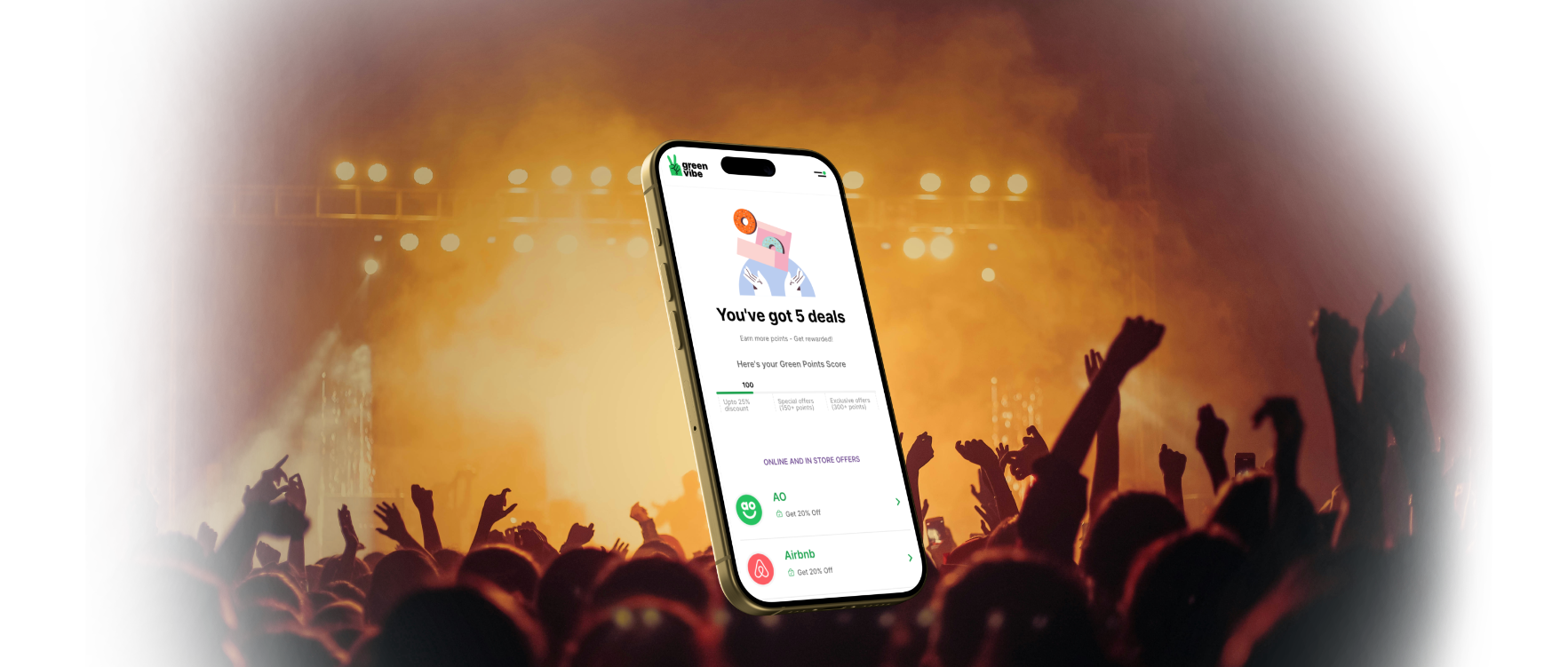
Green Vibe
Reducing Carbon Footprint at AO Arena
Designing a web app to encourage sustainable behaviour at large music venues, through gamification and real-time engagement.
01 — Overview
The Challenge
In February 2021, I helped AO conceptualise a web app to reduce its carbon footprint and get concert-goers actively participating in sustainability efforts within the AO arena venue.
The arena hosts over 200 events per year with thousands of visitors, generating significant recyclable waste. The question: how do you turn recycling into something people actually want to do?
"How might we make sustainable behaviour feel rewarding and social at a live music venue?"
— Design brief, AO Arena × Green Vibe02 — Research
Research & Analysis
User research focuses on understanding user behaviors, needs, and motivations through observation techniques, task analysis, and other feedback methodologies. For me user research is “the process of understanding the impact of design on an audience”.
User scenarios
I needed to think of approaching the web app with the limited data available. I needed to define the user base, the way these users behaved and possible use cases for the app.
Spontaneous
Camera-based recycling verification — users photograph waste items to earn green points. Also supports scanning travel passes from public transport.
Planned
Physical kiosks set up inside the arena. Users deposit recyclable waste and scan a QR code to collect points, redeemable for discounts on tickets and food.
03 — Personas
Who We Designed For
We interviewed 7 regular concert-goers across age groups. Four distinct personas emerged, each with different motivations for (or against) recycling at venues.
The Casual Fan
Attends 2–3 events per year. Motivated by social experiences and peer influence. Unlikely to recycle unless it's effortless and visible.
The Eco-Conscious
Already recycles at home. Frustrated by lack of recycling options at venues. Wants acknowledgment for their effort.
The Reward Seeker
Engaged by loyalty programs. Would recycle consistently if it meant discounts on drinks, merch or future tickets.
The Social Sharer
Motivated by content and status. Loves the idea of appearing on the big screen or sharing eco achievements online.

If recycling actually saved me money on my next ticket, I'd do it every time without thinking twice.
Stephany Harris
- Age:
- 24
- Location:
- Manchester
- Occupation:
- Software developer, attends 8–10 gigs per year
- Gamification user type:
- Achiever and Reward Seeker
Stephany is motivated by tangible outcomes. She's not against sustainability — she just needs a clear incentive. Loyalty schemes and instant rewards are the hook that gets her to change behaviour.
04 — Ideation
Generating Ideas
We brainstormed as a team and developed three distinct concepts, each targeting different user motivations and technical approaches.
Concept 1
Scan Feature on Mobile
Camera-based recycling verification — users photograph waste items to earn green points. Also supports scanning travel passes from public transport.
Concept 2
In-Venue Kiosk
Physical kiosks set up inside the arena. Users deposit recyclable waste and scan a QR code to collect points, redeemable for discounts on tickets and food.
Concept 3
Camera-Aided Interaction
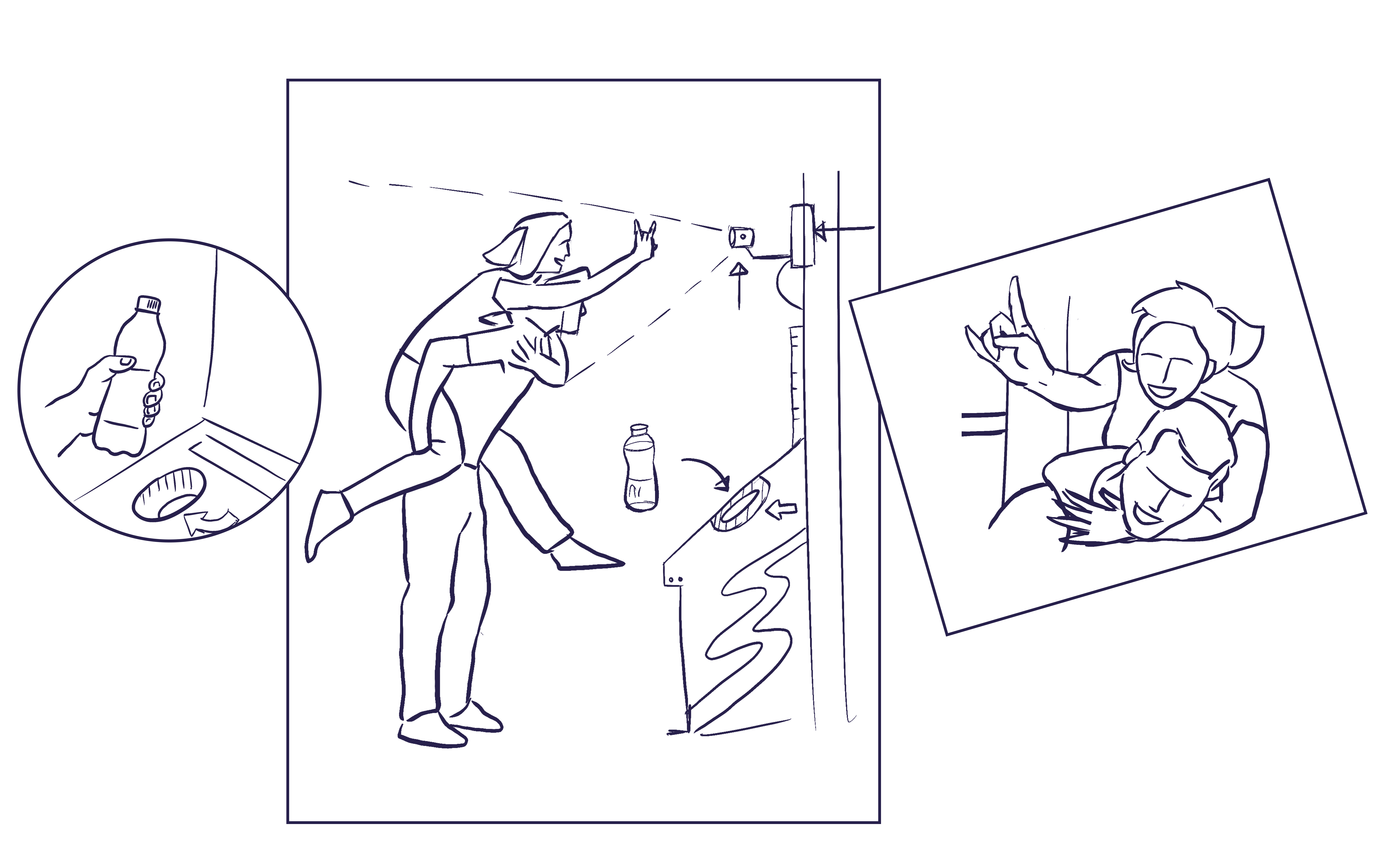
A camera embedded in the kiosk takes a photo of the user when they recycle. Images can be shared on social media or displayed on the AO Arena's main screens.
Three concepts explored during ideation for Green Vibe.
Camera Concept — User Flow
User places items into the bin
The kiosk detects recyclable waste being deposited and initiates the interaction sequence.
Light flashes, beep tone — user poses — Snap!
A countdown triggers the camera. The user is prompted to pose, turning recycling into a fun, memorable moment.
User gets a code to save or share the image
Via NFC tap or QR scan, the photo is instantly available on their phone for social sharing.
Picture displayed on AO Arena screen
As a bonus, selected photos appear on the arena's large screens — a public moment of recognition.
05 — Prototyping
Lo-Fi to Hi-Fi
We moved from paper sketches through lo-fi wireframes to interactive Figma prototypes, testing at each stage to validate assumptions before investing in visual design.
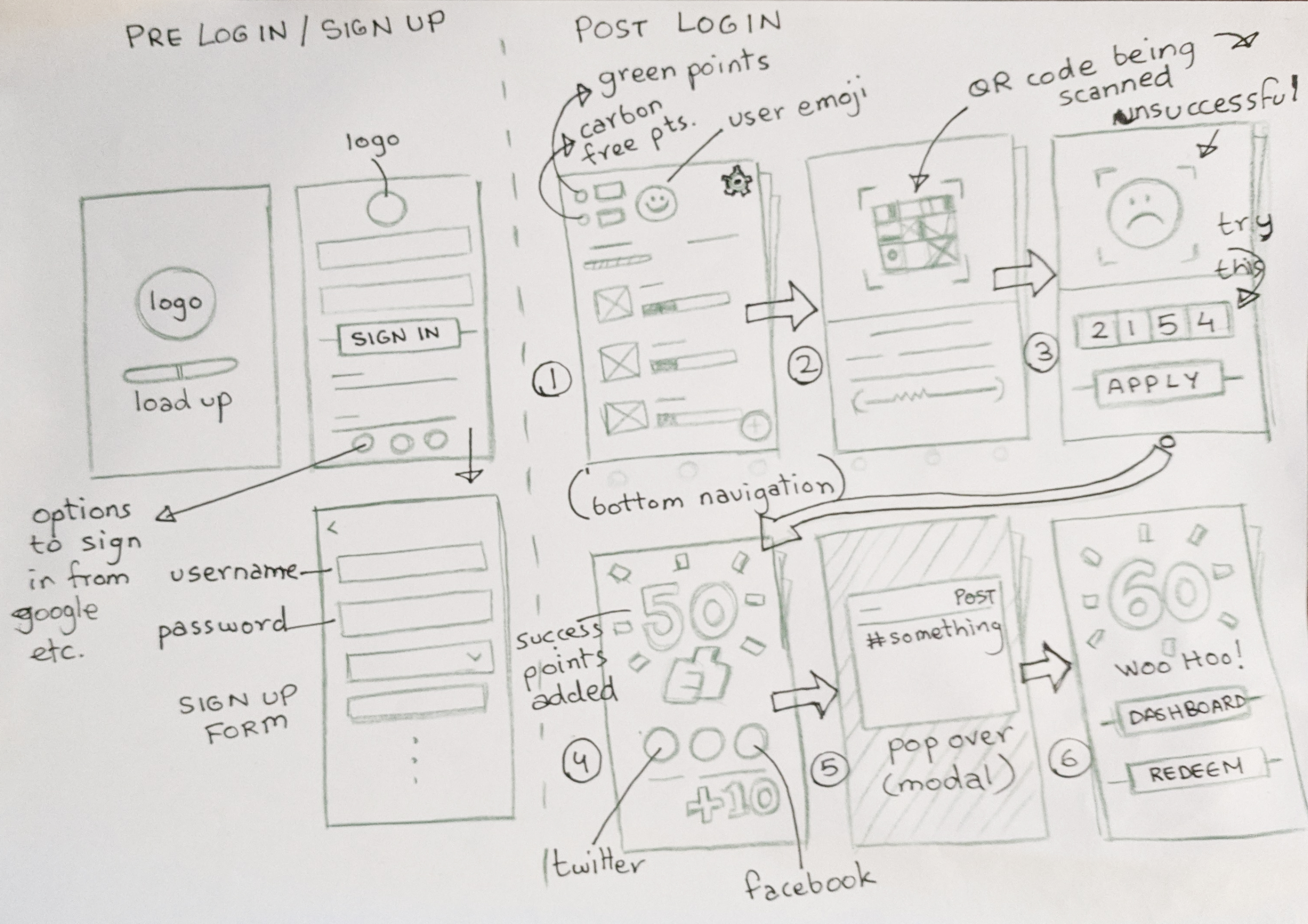
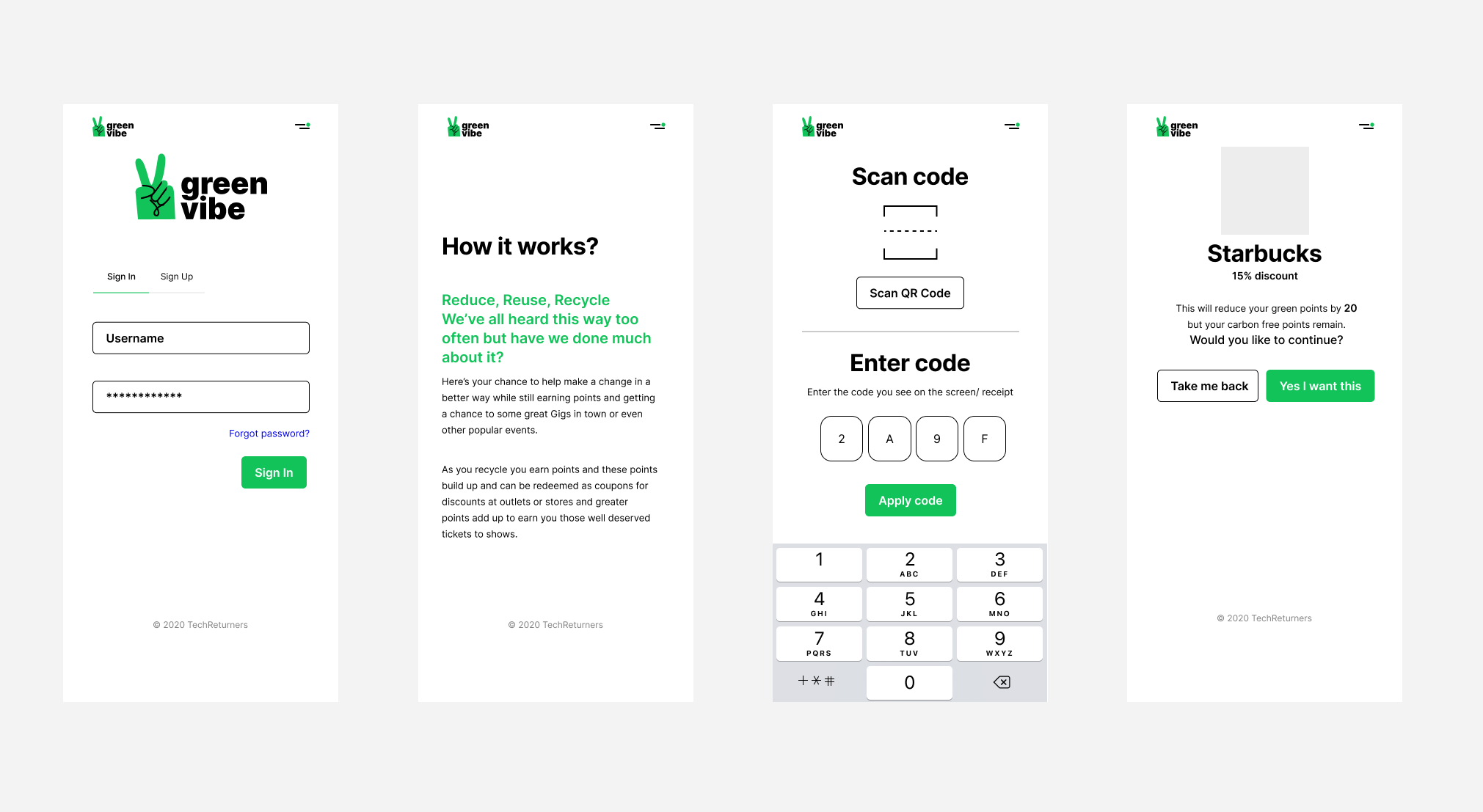
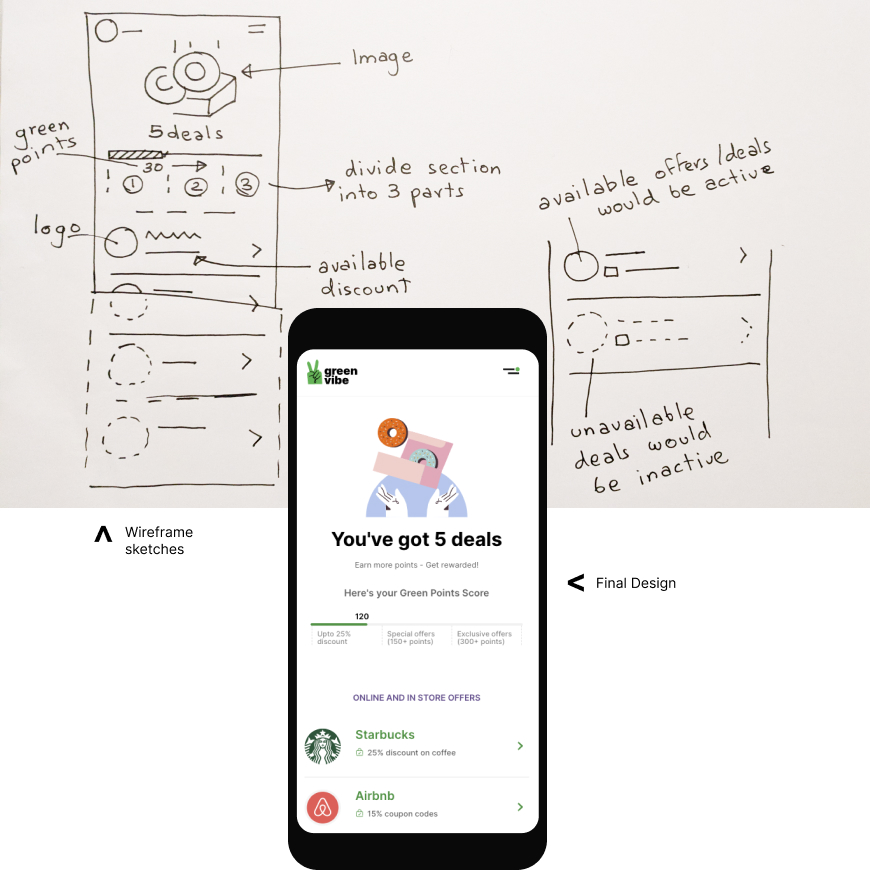
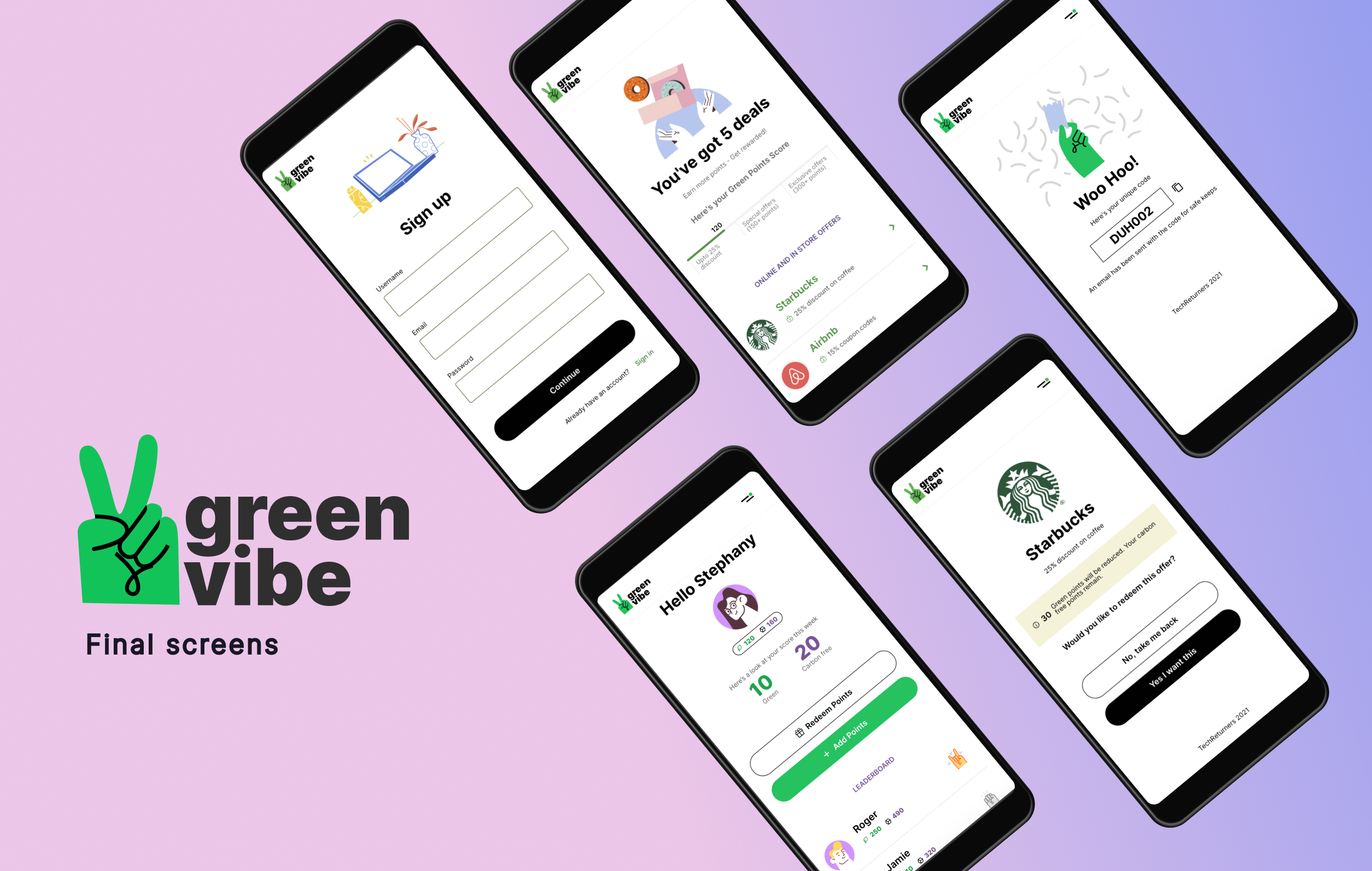
Click any image to view full size — use arrows or keyboard to navigate.
An example animation - to show reward points redeemed.
06 — User Testing
Testing With Real Users
We conducted two rounds of usability testing — first with paper prototypes, then with an interactive Figma prototype. 8 participants per round.
"I love the idea of appearing on the big screen — I'd definitely make my friends recycle just to get that moment."
— Participant 6, Round 2 TestingKey findings informed significant design changes — particularly around the onboarding flow and point redemption clarity, which had an initial task completion rate of only 58%.
07 — Design
Final Design Decisions
The final product combined elements from all three concepts: a mobile-first scanning experience, kiosk integration, and social sharing — unified under a green gamification system.
Green Points System
Users accumulate points per recyclable item scanned. Points are visible in real-time and tied to a progress bar toward the next reward tier.
Reward Redemption
Points unlock discounts on food, drinks, merchandise, and future tickets — direct value tied to venue behaviour.
Photo Moment
Camera-kiosk integration creates a shareable social moment — photos sent to app via NFC and optionally shown on arena screens.
Accessibility
High contrast UI, large touch targets, and screen reader support ensured the experience worked for all audience members.
08 — Results
Outcomes & Impact
The prototype was validated with stakeholders at AO Arena. Projected impact based on behaviour modelling and user research outcomes:
The project demonstrated that gamification, when grounded in genuine user needs, can shift behaviour at scale — even in high-energy, transient environments like concert venues.
View on Github